

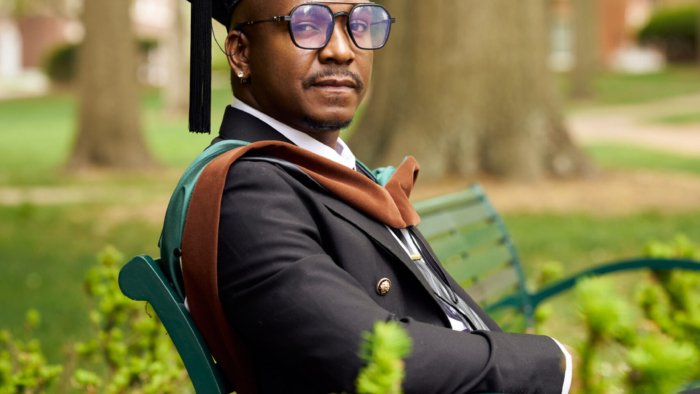
By Fulbright Program scholar Gift Sukez Sukali, MFA
Studying in the United States has been one of the most eye-opening experiences of my academic journey. Coming from Malawi, where I completed my undergraduate studies at Malawi University of Business and Applied Sciences (formerly Malawi Polytechnic), I have had the rare opportunity to experience two very different university systems firsthand.
This experience has allowed me to reflect deeply on how education is structured, how students are supported, and why outcomes often differ between the two systems. While both Malawi and the United States value education, the difference lies in how institutions are designed to help students succeed.
A System Built Around Student Support
One of the biggest differences I noticed in the United States is the level of support available to students.
At Ohio University, support goes far beyond the classroom. Students have access to academic advisors, tutoring services, counseling, mental health resources, career development offices, writing centers, and countless extracurricular opportunities that contribute to both academic and personal growth.
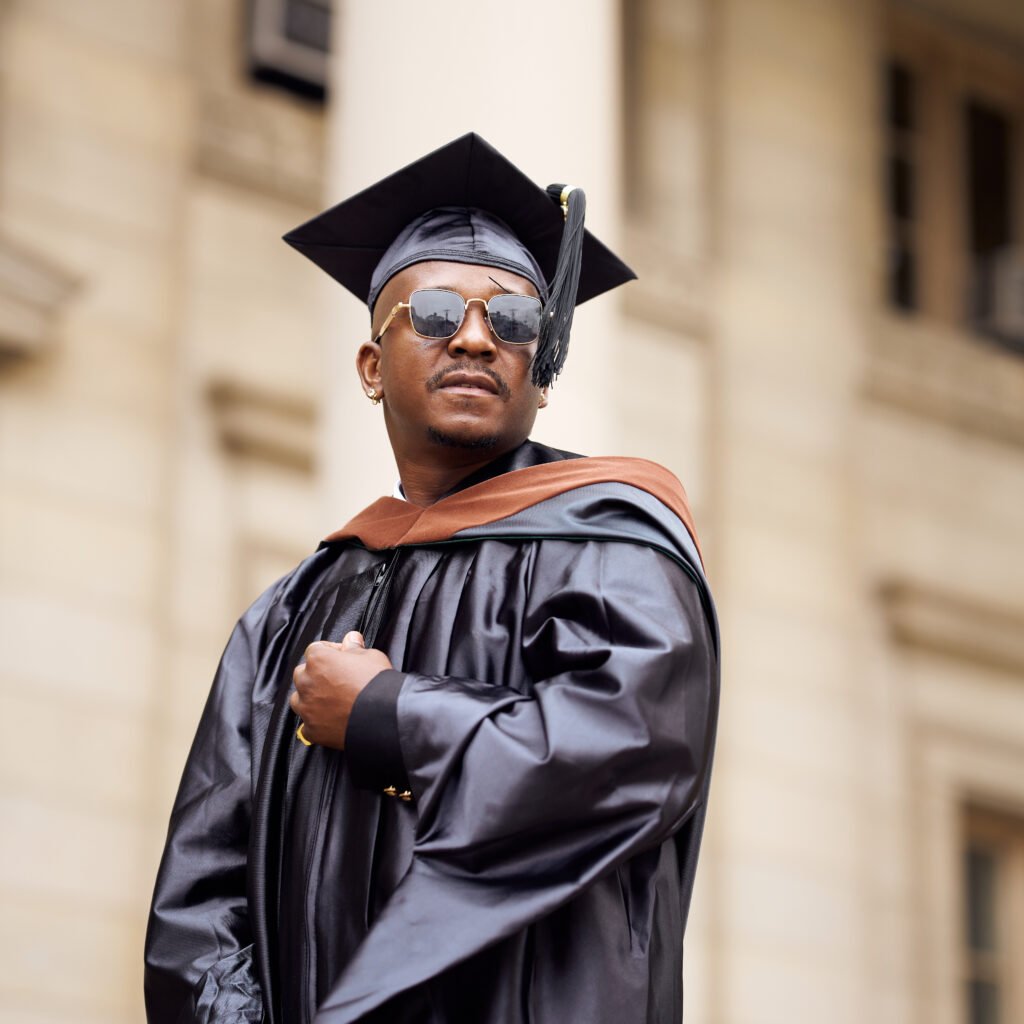
The university environment is intentionally designed to support student success. If a student is struggling academically, emotionally, or personally, there are systems in place to identify that and offer help.
Professors are also highly accessible and genuinely invested in student progress. If you miss a class, it is not uncommon for a professor to reach out, check on your wellbeing, and even arrange a special session to help you catch up.
This was surprising to me because in Malawi, missing class is usually considered entirely your responsibility. Once you fall behind, catching up often depends solely on your own effort.
Why Many Students Excel in the U.S.
People often ask why many students earn distinctions and high grades in American universities.
The answer is simple: the grading system rewards consistent effort.
In many courses, simply attending class, participating actively, completing assignments on time, contributing to discussions, and engaging with course materials already puts a student in a strong position before final assessments.
By the time exams arrive, many students have already secured over 60% of their grade through continuous assessment.
For graduate students, it is even more interesting. Some courses do not have traditional invigilated exams at all. Instead, assessment is based on projects, presentations, research papers, and practical application of knowledge.
The system operates on trust and maturity. The assumption is that if you are pursuing graduate studies, you already understand your purpose and are committed to learning.
The Malawian Reality: Too Much Weight on Exams
During my undergraduate studies in Malawi, I experienced a very different system.
At the time, in my class at Malawi Polytechnic, only one student graduated with distinction.
This was not because the rest of us were incapable or less intelligent. Many brilliant students simply struggled within a system that places enormous emphasis on final examinations.
The challenge with an exam-centered system is that it often measures short-term memory and performance under pressure more than it measures actual understanding, consistency, creativity, or practical application.
A student may work hard throughout the semester, understand the material well, and still perform poorly because of one difficult exam.
I believe this is an area where Malawi’s education system can evolve. Assessment should focus more on whether students are consistently engaging with and applying knowledge, not just how they perform in a few hours of testing.
The Financial Burden Students Face
Another major difference is the student living experience.
In Malawi, many students face financial struggles that go beyond tuition. Students often worry about basic needs such as food, accommodation, transport, and survival itself.
This creates a heavy burden because students are fighting two battles at once: succeeding academically while also worrying about how to meet their daily needs.
In the United States, while students certainly face financial pressures, universities often provide systems that reduce these basic survival concerns through housing support, meal plans, campus employment opportunities, healthcare access, and emergency student services.
As a result, students are able to focus more fully on learning and development.
No student should have to choose between studying for an exam and figuring out what they will eat.
What Malawi Can Learn
Malawi has brilliant students with enormous potential.
What many students need is not greater intelligence or harder exams, they need stronger institutional support.
Our universities can benefit greatly by investing more in:
- Continuous assessment systems
- Student mental health support
- Academic mentorship
- Stronger lecturer-student engagement
- Better access to extracurricular development
- Student welfare systems that address basic needs
Education should not only test knowledge; it should create the right conditions for knowledge to flourish.
A Personal Reflection
Studying at Ohio University has shown me what is possible when an educational institution intentionally invests in student success.
It has made me appreciate the resilience of Malawian students even more. Many of us succeed despite limited support, difficult living conditions, and systems that demand everything while offering little margin for struggle.
If Malawian universities can combine the resilience of our students with stronger support structures, the results would be extraordinary.
The future of education is not about making learning harder.
It is about making success more possible.
This is totally true, in Malawi we do focus much on exams not the experience gained thoughtout the academic semister/year. We can do better Malawi by evolving this poorly systems of education to better systems.
I like the way you have analysed the story. Our education system puts so much pressure on the students. Even if we look at MSCE exams, it’s paper oriented exams and this puts some students at a disadvantage mainly those with disabilities who can not manage to express themselves through writing. There are so many things to change in our education system, but with people like you Malawi can do better. Let’s keep on trying 🇲🇼.
Lets keep trying.
Thats true to say and thanks for speaking on behalf of the voiceless students. The education system in Malawi puts so much pressure on students, the pressure for the hard exams, financial resources, etc. Malawian education system has to evolve indeed. we need peaple like you who can stand for these voiceless students.
Fixing the systems would be a great idea. I for one believe that Malawi has potential in all aspects apart from education.
Thanks for the insight.
We need to fix it.
Everything you articulated is alright but with this kind of economy, I think it will be hard for public universities to support their students economically because 60+% of students are struggling financially. The good way to deal with this problem is reducing the enrollment of students into public universities and deregister unnecessary (similar) programmes so that University can afford to support the reasonable number. A good example is that, past years students used to eat via cafeteria for free in public universities, coming now, students are using the same cafeteria to buy food because of more number of students that University can’t afford to feed them. That is my opinion, so it can be debatable.
So If they reduce the enrollment of students into the public universities, what will those who can not afford the private universities do? The government should just find other means of funding the schools. They can ask for help from other countries like the USA
May be they can change the system through a movie that will stay forever than writing on paper. This can be a game changer in our education and future.
Education in Malawi has forgotten it’s primary purpose of training minds, but rather putting efforts into business.
and rewarding only based on exams and not assethe whole process.
This is very true… And we need practical solutions to this otherwise it will never change
I agree with you sir. I’m sosten persuing education program at mzuzu university. The system indeed concertrate on examining short memory that may also cause students to only read things that might look examinable and not to study and understand the course. This has also result to cheating of examination. I can just finally say that, the system must be reviewed to motivate more success. Thank you
This is very true, very eye opening indeed… it’s just the same structure in all universities, when it comes to practical things on the field.. students fail and others start blaming students without the consent of how their upbringing was
Oooh wow!! Relatable, I think our education system is really failing us. We can do better.
We can really do better as nation. We need policies and guardrails to check if students are getting the knowledge and not just exams.
Well explained…
Our education system has a lot of challenges, not only at higher levels but also at secondary school level down to kindergarten.
Imagine a form 4 student being asked illustrate parts of a grasshopper, fish, mosquitoes, birds etc and label it’s parts.
Exactly man well put sukez, our system is actually failing not us , and you even hear professors applauding themselves “nobody got distinction in my course ” . The other problem with malawian universities is that we do think that the power of a university or for a university to earn a recognition is that the majority should fail of which thats not the issue .
Thank you sukez for enlightening the mases !
exactly. There is need for change.
This is absolutely true. There are many people like me who struggled for more than 12 years just to make it to university. But even now, the struggle has not stopped. Many students are failing not because they are lazy or incapable, but because they are forced to balance financial survival with end-of-semester exams. The system is weak, failing us, and it needs serious reform.
1992 should not be better than 2026 but vice versa.
That’s very true, lecture to students ratio is also high in Malawi which limits students support. Most universities in Malawi have large cohorts with few resources to manage learning. Infrastructure, services at campus cannot accommodate the number of students enrolled. It’s high time we need to invest in our education system otherwise challenges are many in almost all sectors.
Well articulated, most lectures thinks that if a student passes with distinction it shows how weak he or she is , that’s total rubbish
Exactly, challenging students that you cant pass my exams
There is alot to improve in our education system. There are gaps that the community with schools must check. I think Malawi’s people mostly focus on government to provide everything. This type of thinking must stop. We need to scrutinize the education system . This can help Malawi to be better place for every child have acess to education
You’re right!!
The system affects students alot, as for my personal experience balancing academic life and worrying about what will be on the table everyday.
Well put! Our education system in Malawi really needs to be revisited. As an international student who just graduated in the USA, I can relate to this and strongly agree with the points you’ve made. The level of support we receive throughout our entire study period here in the U.S. plays a major role in helping students excel.
There is really a need for us to change, we are rewarding muscle memory and not knowledge.
Am happy having people who not only went abroad so they can basically become heros and outshine their homies. But those who changed their life and think of how they can change things at home. Going through all this made me realize the poor education system is not the “syllabus”. It’s the poor scheme of service delivery and lack of supportive students environment. I believe responsible authorities may realize very soon and take constructive approaches. Komanso despite zolephela. Umadabwa munthu Ali ndi degree but failing to apply the same knowledge in real life. Its a reflection that our exam-centred education system only pushes students to strong academic memory without consistent engagement and knowledge application.
Nyasaland!
Exactly. A student can be academically gifted and still fail in an environment that ignores mental health, financial struggles, mentorship, or human connection. Real education is not just about exams and grades , it’s about building systems where students are supported enough to actually thrive, grow, and reach their full potential.
The system in malawi its like a business for them to benefit more or in other ways i can the system is there to punish us.
How can this be ready transformed though because it’s really important
It couldn’t have been articulated any better than this. You’ve forgotten to mention these other bitter lecturers who seem determined to make life unnecessarily hard for students simply because they struggled during their own time instead of helping students to grow eishhh! Kungopanga Master’s chifukwa choti we haven’t managed to secure a scholarship outside otherwise mhuuu!
Word up. Malawi need to change this system.
We can’t write our hard final exams without paying full tuition fee.
I’m thinking what I’m gonna eat today, the land lord needs his rent, i don’t have internet bundle to finish writing my assignment. How can this student pass their hard end of semester exams
Did anybody else had a hard time to correct certain Suno distortions in their AI-produced recordings? suno artifact cleaner I realized that the Suno AI imperfections can seriously reduce the total sound clarity, primarily with singing becoming unnatural. To solve this, I began relying on a audio cleaner to clean the AI tracks and efficiently strip out distortions from those Suno files, which manages to elevate both the overall sound and precision.
For musicians in need of a simple approach to resolve Suno sound quality issues, there are various zero-cost music repair tools and dedicated cleaners found online that can function as a smart audio cleaner or voice processor. Such tools operate as an intelligent artifact remover and can help turn AI vocals sound genuine. If you’re looking to review them, here is a great guide that provides an AI music cleaner online free and can help with vocal mastering and elevating Suno sound quality effortlessly.
When you’re researching the field of color theory and wondering “what is my color palette,” there are great instruments out there like free color analysis quizzes and platforms that guide you to determine your skin undertones and best season. color analysis pro If you tend towards a gentle winter, warm summer, or even dramatic winter color palette, grasping skin tone charts and taking a skin base tone test can make all the difference in identifying colors that truly suit you. For a more precise approach, the 16 season color analysis model is remarkably complete, and you can use a 16 seasonal color analysis assessment online for personalized results.
If you’ve been using Color Analysis Pro and plan to cancel your plan, or just curious about how to manage your subscription, there are straightforward steps to use to cancel color analysis pro smoothly. Also, if you choose to dive more deeply into subjects like fair olive complexion, red-toned skin, or pale olive skin color maps, many resources share thorough info and illustrations. For extra support with finding your color palette or exploring skin tone science, you can check this out .