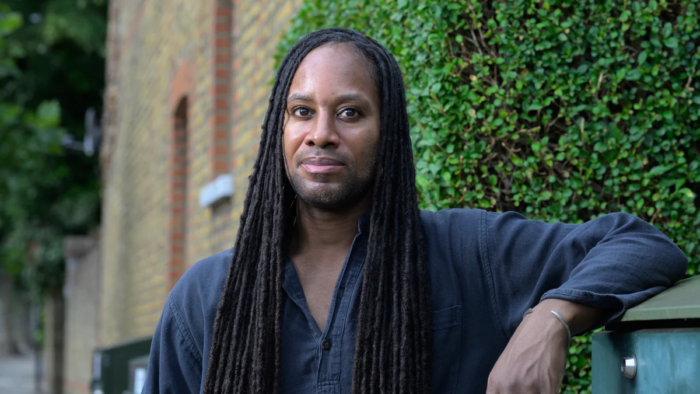
The Jason Arday Case and the Cost of Performative Inclusion
Jason Arday’s death should not be reduced to a story about one academic, one university, or one disputed appointment. It should force a much harder conversation about what happens when institutions turn human beings into symbols and then discover that real people cannot survive indefinitely inside the stories others construct around them.
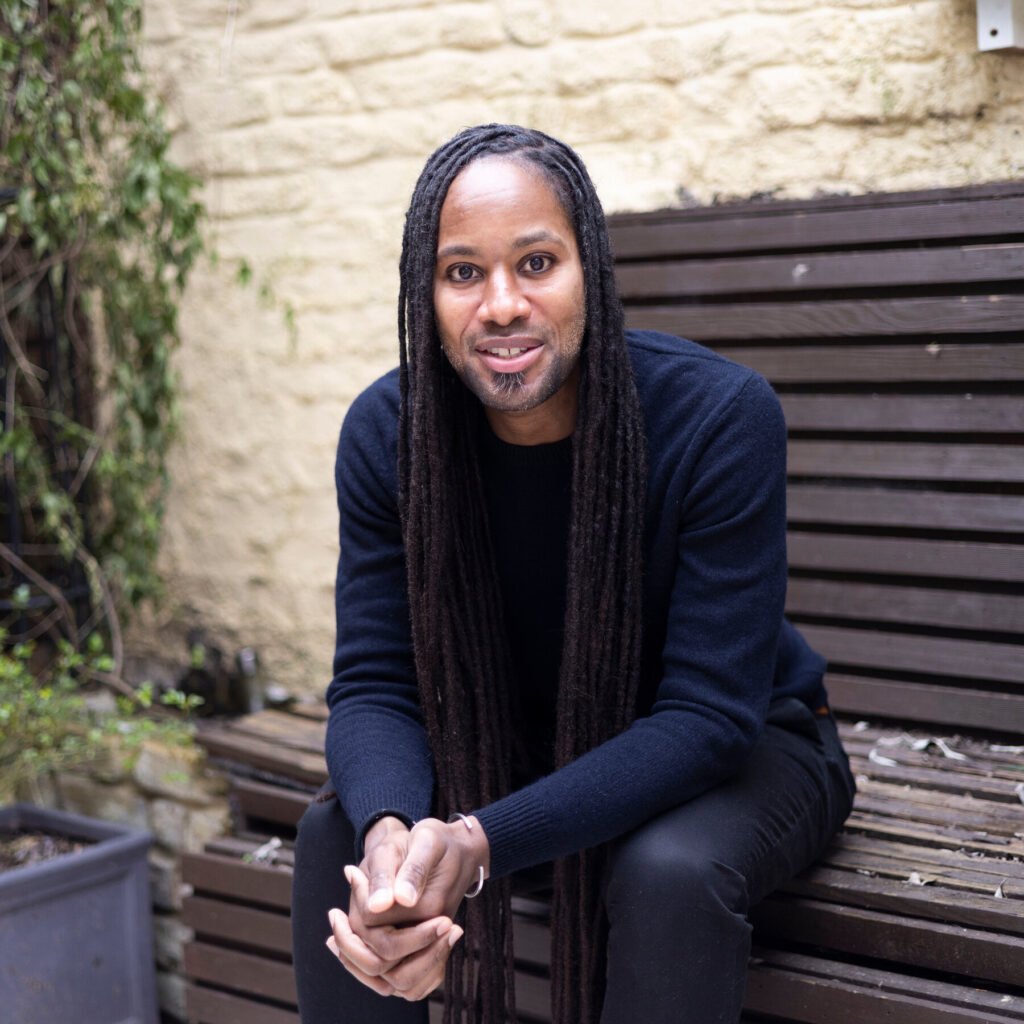
The tragedy is not simply that a prominent Black academic became the subject of intense controversy. The deeper tragedy is that Arday’s identity, biography, achievements, vulnerabilities, and contradictions became entangled in competing institutional and political agendas. He was celebrated as evidence that the doors of elite Britain were opening. He was subsequently scrutinized as evidence that those same institutions had abandoned standards. Between those two narratives was a human being who had been made to carry far more meaning than any individual should have been expected to bear.
That is perhaps the most important lesson from the Arday affair: representation becomes dangerous when institutions confuse a person with what that person represents.
The problem began before the scandal
The temptation is to begin the story when allegations about Arday’s academic record emerged. That is too late. The deeper problem began with the way his appointment was understood and communicated.
Arday’s biography was extraordinary. His rise from difficult circumstances to an elite academic position was compelling. His experiences with disability, poverty, race, education, and social mobility made his story powerful. But powerful stories can become institutional commodities.
Universities increasingly operate in an environment where reputation is not produced only through scholarship. It is produced through websites, press releases, social media, rankings, donor relations, public engagement and carefully constructed narratives about institutional values.
In that environment, a remarkable biography can become almost as valuable as remarkable scholarship.
This creates a dangerous incentive.
Instead of asking, What has this scholar produced? What does the evidence show? What contribution has this person made to the field? institutions can begin asking another question: What does this person allow us to say about ourselves?
That distinction matters.
When a university presents an individual primarily as evidence of its commitment to diversity, social mobility, resilience or inclusion, it creates a symbolic burden that eventually becomes difficult for the individual to control.
The person becomes institutional storytelling.
And once the story becomes more important than the person, failure becomes catastrophic—not merely for the individual, but for the institution’s public narrative.
Arday was caught between two political economies
The reaction to Arday illustrates something broader about contemporary academia: diversity has become a battlefield in which individuals are frequently turned into evidence for arguments that existed before they arrived. To supporters of racial inclusion, his appointment could represent historic progress. To critics of diversity initiatives, it could become evidence of lowered standards.
Both interpretations risk making the same mistake. They begin with an ideological conclusion and then use the individual to prove it. This is what happens when people stop being people and become political symbols.
Arday could simultaneously be a talented scholar, a complicated human being, a flawed individual, a victim of institutional failure, and a person responsible for his own actions. These possibilities are not mutually exclusive. A mature society should be capable of holding several truths at once.
Instead, contemporary public discourse increasingly demands simple characters: hero or fraud, victim or villain, evidence of progress or evidence of decline.
Human beings rarely fit those categories.
The danger of the “exceptional Black person”
There is another uncomfortable dimension to this story.
Black professionals entering historically white elite institutions often encounter a paradoxical expectation: they are expected to be ordinary enough to fit in, but exceptional enough to justify their presence.
This produces a particularly cruel form of visibility.
A white professor can simply be a professor.
A Black professor may become the “first,” the “youngest,” the “trailblazer,” the “inspiration,” or the embodiment of institutional transformation.
Those descriptions may sound celebratory. But celebration can become another form of pressure.
The individual is no longer allowed to be mediocre on a bad day, confused about something, professionally imperfect or simply human. Their mistakes acquire symbolic meaning.
If a white academic exaggerates something on a CV, the question can remain relatively narrow: What did this individual do?
When a Black academic becomes a diversity symbol, critics may ask a broader question: What does this say about the standards of the institution? What does this say about diversity? What does this say about Black scholarship?
That is an enormous burden to place on one person. It also explains why scandals involving minority scholars can have consequences far beyond the individual.
But institutions cannot outsource responsibility to representation
None of this means that identity should shield anyone from scrutiny.
It does not. If serious questions arise about an academic’s qualifications, publications, professional claims or conduct, those questions deserve investigation. Racial identity should not make someone immune from accountability.
But accountability must be applied consistently. The central question should be whether the same standards are being applied to everyone. That is where institutions have a responsibility that goes beyond public relations.
Universities are custodians of academic credibility. Before making prestigious appointments, they have an obligation to verify qualifications, examine scholarship, contact relevant experts and test important claims. If those processes fail, the failure belongs primarily to the institution.
An appointment committee cannot celebrate a person as extraordinary and then, when controversy emerges, suddenly behave as though it had no responsibility for determining whether the person was extraordinary in the first place.
Due diligence is not racism.
Accountability is not racism.
But neither should racism, double standards or political hostility be disguised as accountability.
A credible institution must be able to distinguish between these things.
The media has a different responsibility
The media also occupies an uncomfortable position in this story. Investigative journalism is essential. Universities should be scrutinized. Powerful people should not be protected from legitimate reporting. But scrutiny can become spectacle.
Once a person becomes a national symbol, every contradiction becomes news. Every inconsistency becomes evidence. Every old statement can be excavated. Every mistake can be connected to a larger political narrative. The problem is not necessarily that journalists investigate too much. The problem is that they can investigate selectively and frame disproportionately.
A scandal involving one individual can become a referendum on an entire category of people, that is particularly dangerous in debates about race. The misconduct of one white academic is usually treated as an individual failure. The misconduct of one Black academic can become ammunition in an argument about Black advancement itself.
That asymmetry should concern anyone committed to fairness. At the same time, journalists should not be expected to protect someone simply because they belong to a historically marginalized group. The answer is not less scrutiny. The answer is equal scrutiny governed by equal standards.
The deeper failure is institutional storytelling
Perhaps the most revealing aspect of the Arday case is the extent to which institutions now depend on stories about themselves. Universities do not merely educate, they brand.
They market themselves as progressive, global, inclusive, innovative and socially responsible. Diversity has consequently become part of institutional reputation.
This creates a market for inspirational narratives.
The extraordinary student.
The disadvantaged child who becomes a professor.
The immigrant who reaches the top.
The first Black person.
The first woman.
The person who overcame disability.
These stories matter. But institutions must be careful not to consume people through them.
There is a difference between recognizing someone’s achievement and turning their suffering into institutional capital. The first honors the person, the second benefits the institution.
Black academics should not have to carry the reputation of diversity
One of the most damaging consequences of cases like this is what happens to everyone who comes afterward.
A Black scholar entering an elite institution should not have to answer for another Black scholar.
A woman appointed to a university should not have to demonstrate that women collectively deserve academic positions.
An immigrant professor should not become a referendum on immigration.
A disabled academic should not be expected to represent every disabled person.
This sounds obvious, but symbolic politics routinely violates this principle.
Representation becomes a burden when institutions and commentators treat individuals as representatives of entire populations.
The solution is not to abandon diversity.
It is to normalize it.
The ultimate achievement of inclusion should be a world in which the presence of a Black professor is no longer extraordinary enough to become a story in itself.
Meritocracy also needs an honest examination
The debate surrounding Arday exposes another uncomfortable contradiction.
Institutions that loudly defend meritocracy do not always operate through pure merit.
Elite universities have long been shaped by networks, reputation, inherited social capital, institutional prestige, personal recommendations and access to influential circles.
None of this means merit is irrelevant.
It means merit has never existed in a vacuum.
The question therefore should not be whether diversity has contaminated a previously perfect meritocracy.
The better question is whether elite institutions have ever consistently applied transparent, evidence-based standards to everyone.
If the answer is no, then the appropriate response is not to weaponize one controversial appointment against diversity.
It is to improve the system.
Transparent recruitment.
Independent verification.
Clear promotion criteria.
Consistent publication standards.
External review.
Accountable appointment committees.
And consequences for institutions that fail to conduct basic due diligence.
These reforms would protect everyone.
We also need to rethink the economics of suffering
There is another dimension that deserves attention: the market value of extraordinary personal narratives.
Modern publishing, media and public speaking reward dramatic stories of survival.
The more improbable the journey, the more commercially powerful the narrative can become.
This can create a subtle incentive to present life through extremes.
Trauma becomes content.
Resilience becomes branding.
Adversity becomes a credential.
The danger is not unique to Arday. It is part of a broader culture in which people increasingly understand their lives through marketable personal narratives.
Social media has intensified this phenomenon.
We are encouraged to build personal brands around struggle, transformation and exceptionalism.
But a human being is more complicated than their origin story.
People should not have to remain permanently inspirational to retain their dignity.
The real lesson is not “diversity failed”
That conclusion would be far too easy.
The lesson is that diversity without institutional integrity is fragile.
Representation cannot substitute for rigorous hiring.
A compelling biography cannot substitute for scholarship.
A prestigious university cannot substitute for due diligence.
A progressive press release cannot substitute for structural reform.
And a diversity initiative cannot substitute for changing the systems that determine who gets opportunity, who receives protection and who bears the consequences when institutions fail.
The answer to institutional failure is not less inclusion.
It is better institutions.
Arday’s legacy should not be reduced to the controversy
Whatever the final historical assessment of Jason Arday’s career becomes, his life should not be reduced to the controversy that consumed its final chapter.
Nor should his death become another instrument in Britain’s culture wars.
There is a danger that the same symbolic machinery that elevated him will now redefine him through his downfall.
First, he was made into a symbol of progress.
Then he became a symbol of institutional failure.
Then, potentially, he becomes a symbol in the argument against diversity.
The cycle continues.
Perhaps the most humane response is to refuse that cycle.
Arday was a person before he was a professor, before he was a symbol, before he became controversial and before institutions began debating what his existence meant.
The broader lesson is therefore not about whether one side of the culture war was right.
It is about what happens when institutions stop seeing people as complicated human beings and start seeing them as instruments for telling stories about themselves.
A university should not need a heroic biography to demonstrate that it believes in equality.
A Black academic should not need to be extraordinary to justify being in the room.
And when an institution makes a mistake, it should not sacrifice the individual to preserve its reputation.
The tragedy of Jason Arday should compel universities, journalists, publishers, and advocates to ask a difficult question:
Are we building institutions that genuinely include people or institutions that merely know how to display them?
That distinction may ultimately be the most important legacy of this tragedy, but for now all I can say is Rest in peace, Jason Arday. May your life be remembered not simply for the controversy that surrounded your final chapter, but for the scholarship, barriers you challenged, and possibilities your journey represented. May your death compel institutions to examine not only how they celebrate people, but how they protect, support, scrutinize, and ultimately treat them as human beings.