ICF _ APRIL 3 200

Malawian Students Are Not Failing — The System Is.

By  Fulbright Program scholar Gift Sukez Sukali, MFA

Studying in the United States  has been one of the most eye-opening experiences of my academic journey. Coming from Malawi, where I completed my undergraduate studies at Malawi University of Business and Applied Sciences (formerly Malawi Polytechnic), I have had the rare opportunity to experience two very different university systems firsthand.

This experience has allowed me to reflect deeply on how education is structured, how students are supported, and why outcomes often differ between the two systems. While both Malawi and the United States value education, the difference lies in how institutions are designed to help students succeed.

A System Built Around Student Support

One of the biggest differences I noticed in the United States is the level of support available to students.

At Ohio University, support goes far beyond the classroom. Students have access to academic advisors, tutoring services, counseling, mental health resources, career development offices, writing centers, and countless extracurricular opportunities that contribute to both academic and personal growth.

The university environment is intentionally designed to support student success. If a student is struggling academically, emotionally, or personally, there are systems in place to identify that and offer help.

Professors are also highly accessible and genuinely invested in student progress. If you miss a class, it is not uncommon for a professor to reach out, check on your wellbeing, and even arrange a special session to help you catch up.

This was surprising to me because in Malawi, missing class is usually considered entirely your responsibility. Once you fall behind, catching up often depends solely on your own effort.

Why Many Students Excel in the U.S.

People often ask why many students earn distinctions and high grades in American universities.

The answer is simple: the grading system rewards consistent effort.

In many courses, simply attending class, participating actively, completing assignments on time, contributing to discussions, and engaging with course materials already puts a student in a strong position before final assessments.

By the time exams arrive, many students have already secured over 60% of their grade through continuous assessment.

For graduate students, it is even more interesting. Some courses do not have traditional invigilated exams at all. Instead, assessment is based on projects, presentations, research papers, and practical application of knowledge.

The system operates on trust and maturity. The assumption is that if you are pursuing graduate studies, you already understand your purpose and are committed to learning.

The Malawian Reality: Too Much Weight on Exams

During my undergraduate studies in Malawi, I experienced a very different system.

At the time, in my class at Malawi Polytechnic, only one student graduated with distinction.

This was not because the rest of us were incapable or less intelligent. Many brilliant students simply struggled within a system that places enormous emphasis on final examinations.

The challenge with an exam-centered system is that it often measures short-term memory and performance under pressure more than it measures actual understanding, consistency, creativity, or practical application.

A student may work hard throughout the semester, understand the material well, and still perform poorly because of one difficult exam.

I believe this is an area where Malawi’s education system can evolve. Assessment should focus more on whether students are consistently engaging with and applying knowledge, not just how they perform in a few hours of testing.

The Financial Burden Students Face

Another major difference is the student living experience.

In Malawi, many students face financial struggles that go beyond tuition. Students often worry about basic needs such as food, accommodation, transport, and survival itself.

This creates a heavy burden because students are fighting two battles at once: succeeding academically while also worrying about how to meet their daily needs.

In the United States, while students certainly face financial pressures, universities often provide systems that reduce these basic survival concerns through housing support, meal plans, campus employment opportunities, healthcare access, and emergency student services.

As a result, students are able to focus more fully on learning and development.

No student should have to choose between studying for an exam and figuring out what they will eat.

What Malawi Can Learn

Malawi has brilliant students with enormous potential.

What many students need is not greater intelligence or harder exams, they need stronger institutional support.

Our universities can benefit greatly by investing more in:

  • Continuous assessment systems
  • Student mental health support
  • Academic mentorship
  • Stronger lecturer-student engagement
  • Better access to extracurricular development
  • Student welfare systems that address basic needs

Education should not only test knowledge; it should create the right conditions for knowledge to flourish.

A Personal Reflection

Studying at Ohio University has shown me what is possible when an educational institution intentionally invests in student success.

It has made me appreciate the resilience of Malawian students even more. Many of us succeed despite limited support, difficult living conditions, and systems that demand everything while offering little margin for struggle.

If Malawian universities can combine the resilience of our students with stronger support structures, the results would be extraordinary.

The future of education is not about making learning harder.

It is about making success more possible.

31travel-malawi-promo-videoSixteenByNineJumbo1600

Was Africa Ready for Independence?

Has independence truly delivered on its promise for Africa, or has it fallen short of the hopes that defined the 1960s wave of liberation?

Between the 1960s and 1970s, much of Africa broke free from colonial rule, ushering in an era filled with optimism. Political independence was expected to unlock economic growth, strengthen governance, and give Africans control over their own destinies. Freedom was not just symbolic, it was meant to translate into prosperity, dignity, and self-reliance.

Yet, more than half a century later, the reality is far more complex.

Across the continent, many nations continue to grapple with deep-rooted challenges: corruption, economic dependency, fragile institutions, and persistent poverty. Despite being rich in natural resources, a paradox remains, Africa exports raw materials and imports finished goods at a premium. This pattern mirrors colonial economic structures, raising a difficult question: has true independence economic and structural ever been achieved?

Africa is one of the most resource-rich regions in the world, yet many of its countries lack the infrastructure, capital, and technological capacity to fully exploit these resources independently. As a result, foreign companies often dominate extraction industries, refining raw materials abroad and selling them back at higher prices. This dynamic creates a cycle of dependency that undermines the very essence of independence.

If sovereignty means control over one’s resources and economic destiny, then for many African countries, independence remains incomplete, more theoretical than practical.

Case Study: Malawi

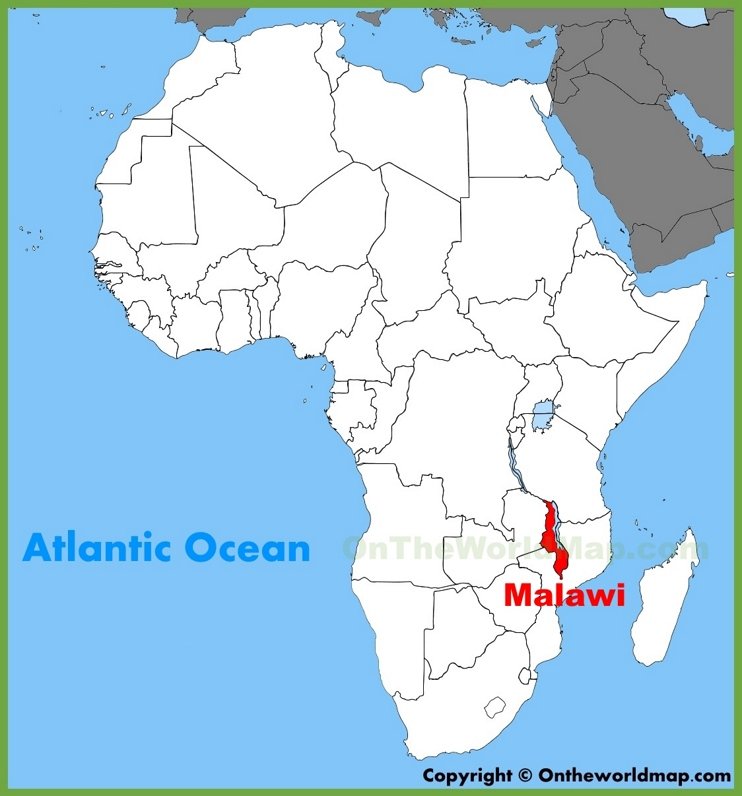
The situation in Malawi illustrates this contradiction vividly. Despite being endowed with valuable natural resources, including uranium, monazite, neodymium, newly discovered massive rutile and graphite deposits in Kasiya, and other rare earth elements, Malawi continues to struggle economically.

One of the country’s most pressing issues is foreign exchange (forex) scarcity. Malawi imports far more than it exports, leading to chronic currency shortages that affect everything from fuel availability to industrial production. This imbalance persists even though the country holds significant mineral wealth, including an estimated portion of global rare earth reserves.

Why does this happen?

  • Limited processing capacity: Raw minerals are often exported without local beneficiation.
  • Weak industrial base: There is minimal value addition within the country.
  • Governance challenges: Corruption and policy inconsistency discourage sustainable investment.
  • Economic structure: Heavy reliance on agriculture and imports makes the economy vulnerable.

In theory, Malawi’s resource base could support industrial growth and economic transformation. In practice, structural inefficiencies and governance gaps prevent that potential from being realized.

Leadership, Policy, and Accountability

A recurring challenge across many African nations remains the question of leadership. Corruption, often embedded at the highest levels of government, continues to divert critical resources away from public development, weakening institutions and eroding public trust. While incoming administrations frequently campaign on promises to fight corruption, the reality in power can look very different, with some perpetuating the very systems they once condemned.

This raises difficult but necessary questions about governance. Is democracy, as currently practiced in some contexts, delivering the accountability and development people expect? Or is the issue less about the system itself and more about how it is implemented?

Calls for alternatives, such as authoritarian or centralized rule, often emerge out of frustration. However, history suggests that dictatorship is not a reliable solution. While some authoritarian regimes have delivered short-term stability or rapid development, many have also been marked by repression, lack of accountability, and long-term institutional damage.

Rather than abandoning democracy, the more urgent challenge may be to strengthen it, building transparent institutions, enforcing the rule of law, empowering citizens, and ensuring that leadership is truly accountable. The problem may not be democracy itself, but the gap between its ideals and its practice.

But leadership alone does not tell the full story. Education systems, institutional strength, and long-term policy planning also play critical roles. Countries that have made progress often demonstrate a combination of these factors.

Signs of Progress: Lessons from Others

Not all African countries have followed the same trajectory. Nations like Rwanda, Tanzania, Egypt, and Ethiopia have made notable strides in recent decades.

Their progress can be attributed to:

  • Stronger governance frameworks
  • Strategic investment in infrastructure
  • Focus on education and human capital
  • Efforts to reduce corruption and improve accountability

While each country has its own challenges, they offer valuable examples of how policy direction and leadership can influence national outcomes.

Was Africa Ready for Independence?

This question is often debated. Some argue that colonial powers left behind weak institutions, making the transition to self-rule difficult. Others believe that post-independence leadership failures are the primary cause of stagnation.

The truth likely lies somewhere in between.

Independence was necessary and inevitable, but sustaining it required systems, discipline, and vision that many nations were still developing. The challenge was not just gaining freedom, but managing it effectively.

Looking Forward

Africa’s story is still being written. The continent holds immense potential, not just in natural resources, but in its people, culture, and innovation. The question is no longer whether independence was justified, but how it can be deepened and made meaningful.

True independence in the 21st century may depend on:

  • Building resilient institutions
  • Investing in local industries and value addition
  • Strengthening education systems
  • Holding leadership accountable
  • Reducing dependency on external powers

So, has independence let Africa down? Or has Africa struggled to fully realize independence?

The answer is not simple, but it is clear that the next chapter will depend less on history, and more on the decisions being made today.

IMG_4152

The Ultimate Investment

There is a specific kind of hunger that comes from being raised in the ghetto, places like Chilinde and Kawale. It is a hunger not just for “better things,” but for a better version of oneself. It is the drive to transcend the immediate surroundings and see what lies beyond the horizon.

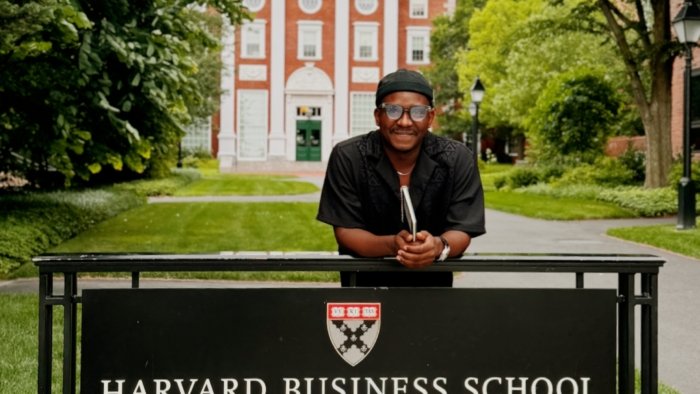
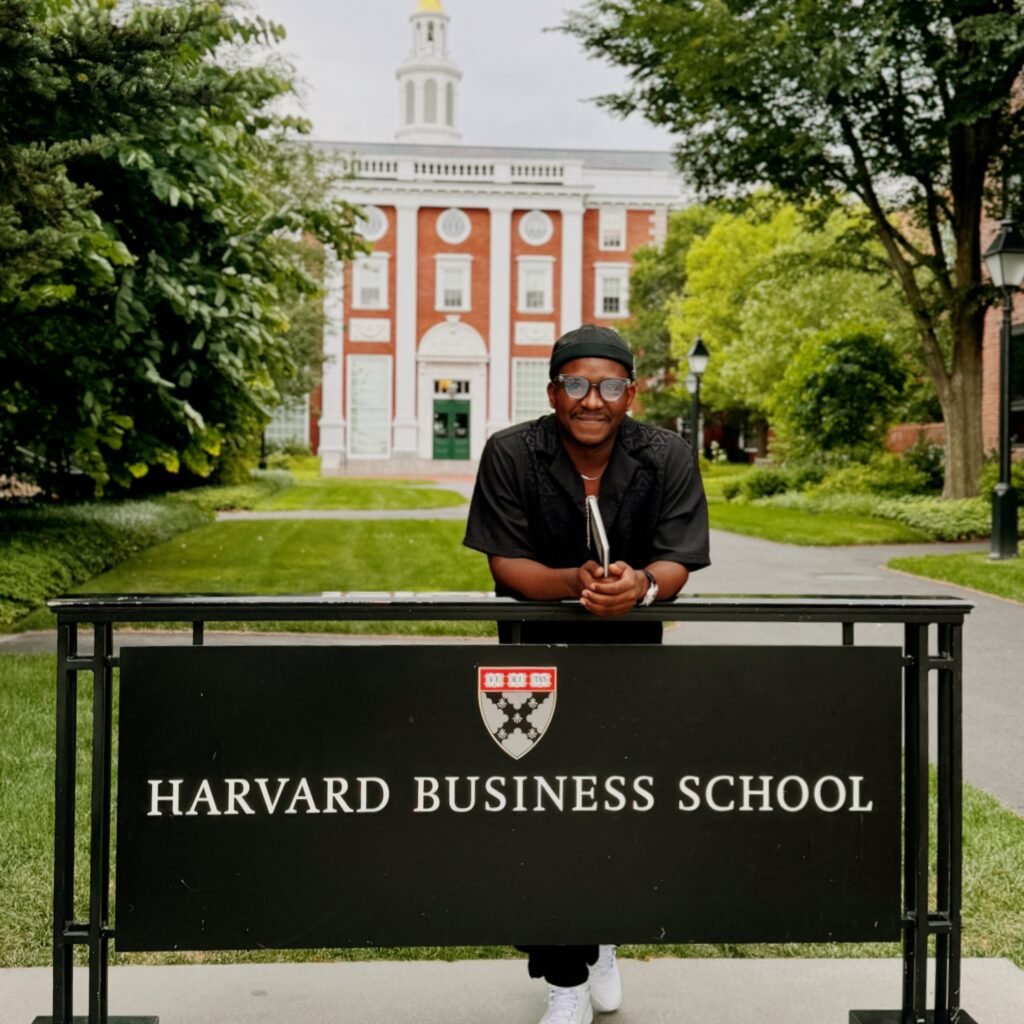
Looking back at my roots in Liwonde, the journey to the halls of Ohio University, where I am finalizing my MFA, and into the specialized programs at Harvard Business School, seems improbable on paper. Yet, here I am. This journey hasn’t been a product of luck; it has been a product of a singular, unwavering philosophy.

As we navigate 2026, a year defined by rapid shifts and new challenges, I’ve been reflecting on the bridge between where you start and where you dream of being. It boils down to one fundamental truth: The best investment you can ever make is in yourself.

The Power of Persistence: Beyond “Trying Hard”

Persistence is often misunderstood as simply working long hours. In reality, persistence is the ability to maintain an obsession with a goal long after the initial excitement has faded.

It is the discipline to stay the course when the road from Lilongwe feels endless, and the obstacles seem insurmountable. True persistence is a refusal to accept “no” as a final answer. When the world closes a door, your persistence is what builds a new one.

Knowledge: Your Mental “Operating System”

We live in an era of unprecedented change. Industries shift overnight, economies fluctuate, and technology evolves faster than we can keep track of. In this landscape, physical assets, money, property, and equipment can be volatile. However, knowledge is the only currency that never depreciates. It is the “mental software” that allows you to solve problems that don’t even exist yet.

When you invest in your education, whether through formal institutions like HBS or the relentless pursuit of self-directed learning, you are compounding your personal value. Knowledge provides three critical pillars:

  • Adaptability: The power to pivot when the market or circumstances change.
  • Perspective: The ability to see a hidden opportunity where others only see a dead end.
  • Confidence: The internal quiet that comes from knowing you are capable, because you have done the work to build your foundation.

2026: Looking Beyond the “Zip Code.”

This year, I challenge you to look beyond your current zip code, job title, and limitations. I am living proof that your background is a foundation, not a cage.

You do not choose the circumstances of your birth, whether in poverty or riches, but you do decide the trajectory of your life through deliberate, daily decisions. Don’t wait for someone to hand you an opportunity. Instead, build the skills that make you the only logical choice for that opportunity.

Read the book, take the course, seek out the mentor, and never ever stop betting on yourself.

From Malawi to the world, the message remains the same: Keep going. The view from the top is worth every step of the climb.

Coming Soon: “Anyone Can Shine”

I am thrilled to announce that my book, “Anyone Can Shine: The UnderDOG Blueprint,” will be published next month. It is a guide for anyone who feels like the odds are stacked against them, providing the mental framework to rise above any circumstance.

It will be available on all major distribution platforms. Stay tuned for the launch!

Untitled design (14)

The Creative Brand: Merging Art and Strategy

Sukez’s creativity extends beyond filmmaking — he’s also a strategic storyteller for brands and organizations. His marketing content merges emotional storytelling with visual design, helping brands communicate not just products, but purpose.

From short films and commercials to digital campaigns, he crafts narratives that connect brands with people on a deeper level. His work bridges creativity and strategy, proving that great marketing is not about selling — it’s about storytelling.

As the media landscape evolves, Sukez continues to stand at the intersection of art and business. His goal is simple yet ambitious: to use creativity as a force for connection, culture, and change.

Untitled design (8)

Beyond the Frame: The Writer Within

While many know him for his work behind the camera, Sukez’s talent extends to the written word. His articles and reflections explore creativity, leadership, and the role of art in shaping society. He believes writing allows him to think aloud — to give context to the visuals and ideas that drive his films.

From essays on youth empowerment to thought pieces on media evolution, Sukez uses his platform to provoke thought and inspire growth. His voice on paper carries the same rhythm as his camera — honest, bold, and deeply reflective.

In combining film and writing, Sukez creates a complete circle of storytelling. He doesn’t just show what’s happening — he helps people understand why it matters. That duality makes his work uniquely human and timeless.

Untitled design (7)

Telling Africa’s Untold Stories

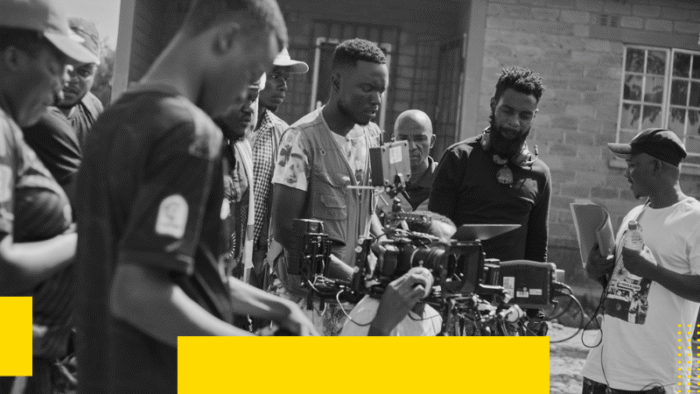
In a world often dominated by external narratives, Sukez stands as a filmmaker determined to reclaim the African voice. His documentaries go beyond entertainment — they document resilience, celebrate culture, and shine a light on voices that deserve to be heard.

Through his camera, he explores both the struggles and triumphs that shape communities. His storytelling doesn’t romanticize Africa; it dignifies it — showing the complexity, strength, and humanity that the continent embodies.

By focusing on real people and real stories, Sukez aims to shift perceptions and prove that Africa’s greatest power lies in its authenticity. His mission is clear: to tell stories that are not just seen, but felt — by both local and global audiences.

The Vision Behind the Lens:

From humble beginnings to directing some of Malawi’s most memorable productions, Gift Sukez Sukali’s story is one of passion, perseverance, and purpose. His love for visual storytelling began as a curiosity — experimenting with cameras and editing — and evolved into a full-fledged career dedicated to documenting the human experience.

Over the years, Sukez has grown into one of the region’s most recognized creative voices, known for capturing raw emotion and transforming ordinary stories into powerful visual statements. His films and documentaries reflect a deep understanding of culture, identity, and impact — balancing art with authenticity.

For Sukez, filmmaking is not just about visuals — it’s about vision. Every project is a chance to inspire, challenge perspectives, and redefine how African stories are told. His work continues to remind us that creativity, when rooted in truth, has the power to move nations.